The New Geography of Global Supply Chains
Companies are rethinking where goods are made and how they move, with resilience becoming as important as cost.
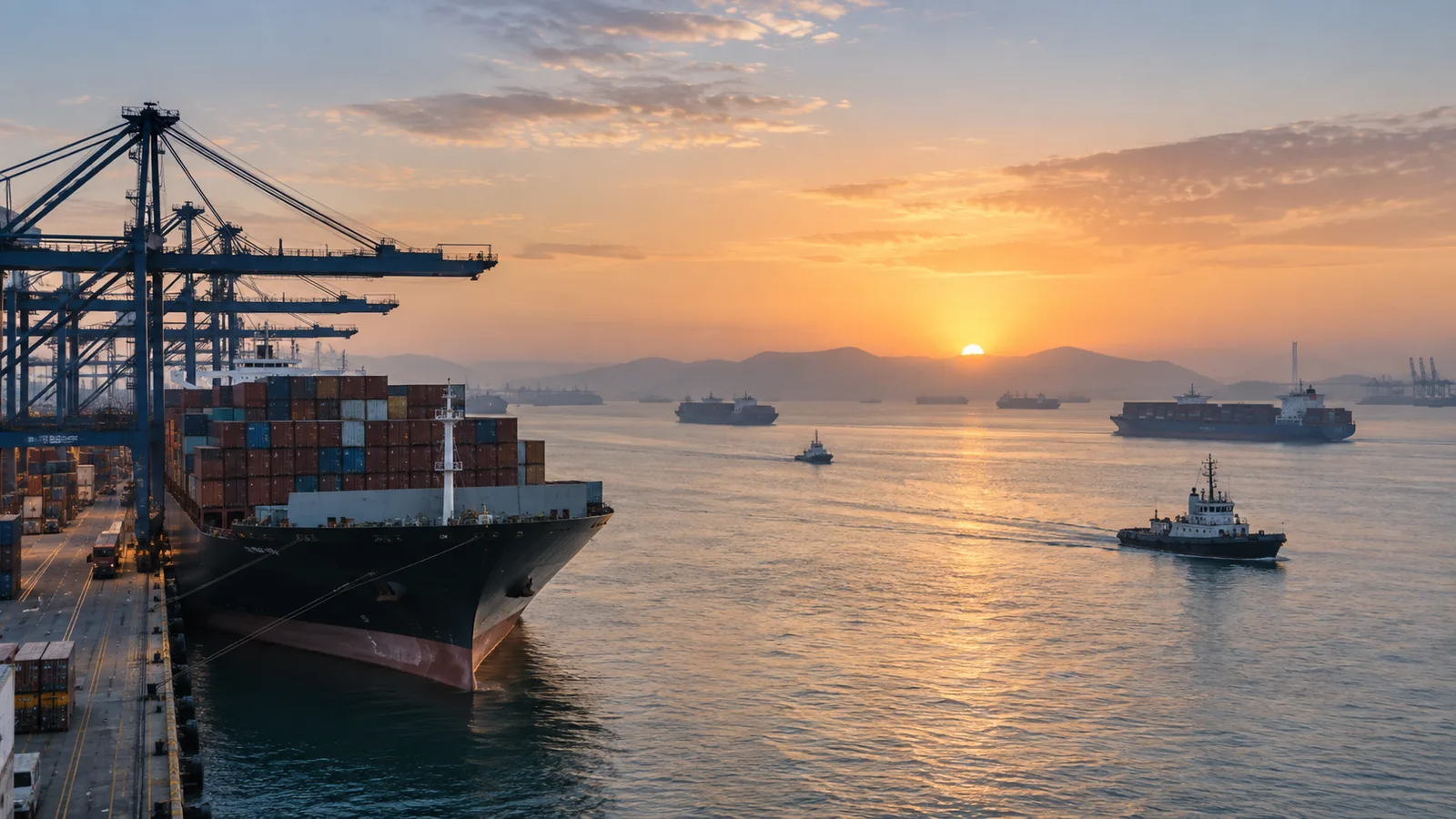
Companies are rethinking where goods are made and how they move, with resilience becoming as important as cost.
KEY TAKEAWAYS- A supply chain is the network of producers, carriers and retailers that takes a product from raw material to customer.
- A more resilient network can include regional production, clearer visibility into lower-tier suppliers and contracts that allow capacity to shift.
- A second supplier is useful only if it can actually deliver when the first cannot.
- A ship's route is only one part of a delivery.
- Regional manufacturing can shorten some journeys and reduce exposure to distant bottlenecks.
Why the map is changing
A supply chain is the network of producers, carriers and retailers that takes a product from raw material to customer. For decades, many firms optimized that network primarily for low cost and predictable transit. Recent disruptions have exposed the price of relying on a single route or supplier.
The response is gradual rather than a wholesale retreat from international trade. Companies are adding second suppliers, holding critical inventory and checking whether ports, roads and customs systems can handle a sudden diversion.
What resilience looks like
A more resilient network can include regional production, clearer visibility into lower-tier suppliers and contracts that allow capacity to shift. Each choice has a cost. More inventory ties up cash; duplicate production can reduce economies of scale.
For consumers, the result may be less dramatic than the rhetoric suggests. A product can still cross several borders, even if its final assembly moves closer to buyers. The useful question is whether the network can keep operating when one link fails.
The difference between diversification and duplication
A second supplier is useful only if it can actually deliver when the first cannot. Two companies may buy a crucial component from the same factory farther upstream. Mapping those hidden dependencies takes more work than adding another name to a purchasing spreadsheet. Buyers need to understand the materials, specialized machinery and transport links behind a finished part.
Full duplication, meanwhile, can be expensive. A business may choose to diversify only its most critical inputs and accept some exposure elsewhere. That decision depends on how quickly an interruption would reach customers, how hard a substitute is to qualify and how much inventory can be stored without becoming obsolete. Resilience is a set of priorities, not a promise that nothing will ever break.
Ports, paperwork and visibility
A ship's route is only one part of a delivery. Customs documentation, warehouse capacity, truck availability and the receiving firm's own schedule all affect when goods are usable. A company can move production geographically and still face delays if it has not planned for these handoffs. Better data helps, but it must describe real physical capacity rather than an optimistic estimated arrival time.
The most useful visibility tools show where an order is, which milestone has been completed and who can act when it stalls. That information allows a buyer to warn customers early, reroute a shipment or change production plans. It also exposes where a firm has too little knowledge of its suppliers. Technology cannot replace a working relationship with the people who move and make the goods.
What a regional strategy can and cannot do
Regional manufacturing can shorten some journeys and reduce exposure to distant bottlenecks. It may also put production closer to engineers and customers, making design changes easier. Yet factories need workers, power, water, equipment and reliable local suppliers. Those conditions are unevenly distributed, so moving final assembly alone may do little to change the underlying network.
The arithmetic also differs by product. Heavy, time-sensitive goods can benefit from shorter routes, while compact, high-value components may travel economically over long distances. Policymakers and companies should avoid treating one model as universal. The test is whether a proposed shift improves continuity and service after all costs and constraints are counted.
Questions worth asking of any resilience claim
When a company announces a supply-chain change, ask which product lines are affected and how much capacity the new arrangement provides. A small trial can be valuable, but it is not the same as a second system ready to replace the first. Ask whether critical components are sourced independently and whether the plan has been tested against a realistic interruption.
For readers, the larger lesson is that globalization is not one switch that can be turned on or off. It is a collection of relationships and choices. A more durable network may still be global, but it should make its dependencies visible, keep options open and tell customers honestly what happens when conditions change.
How smaller firms experience the shift
Large manufacturers can negotiate capacity with multiple suppliers, but a smaller business may buy through distributors and have limited visibility beyond them. That does not make planning pointless. It can identify its most indispensable components, ask distributors about alternatives and keep a realistic safety stock for items that are slow to replace. A modest plan can make a meaningful difference when one shipment is delayed.
Smaller firms also depend on information from customers. If a buyer changes an order at short notice, the supplier may have little room to adjust materials or staffing. Longer planning horizons and honest forecasts can make the entire chain steadier. Resilience is shared across contracts; it cannot be purchased by one party while all the uncertainty is pushed onto another.
The environmental question
A shorter route is not automatically a lower-impact route. Transport mode, energy used in factories, product durability and the number of extra facilities all matter. Holding large inventories can create waste when products change quickly. A company assessing a new supply plan should compare the whole life cycle rather than treating distance alone as a complete environmental measure.
This is why the new geography of supply chains is unlikely to settle into one simple map. Firms will keep balancing cost, speed, continuity, labor conditions and environmental effects. The strongest strategy makes those tradeoffs explicit and can be revised when evidence changes. A network designed to adapt is more credible than one marketed as permanently disruption-proof.