How Cities Can Make Hot Streets Safer
Shade, surfaces and accessible cooling spaces all affect how heat is experienced at street level.
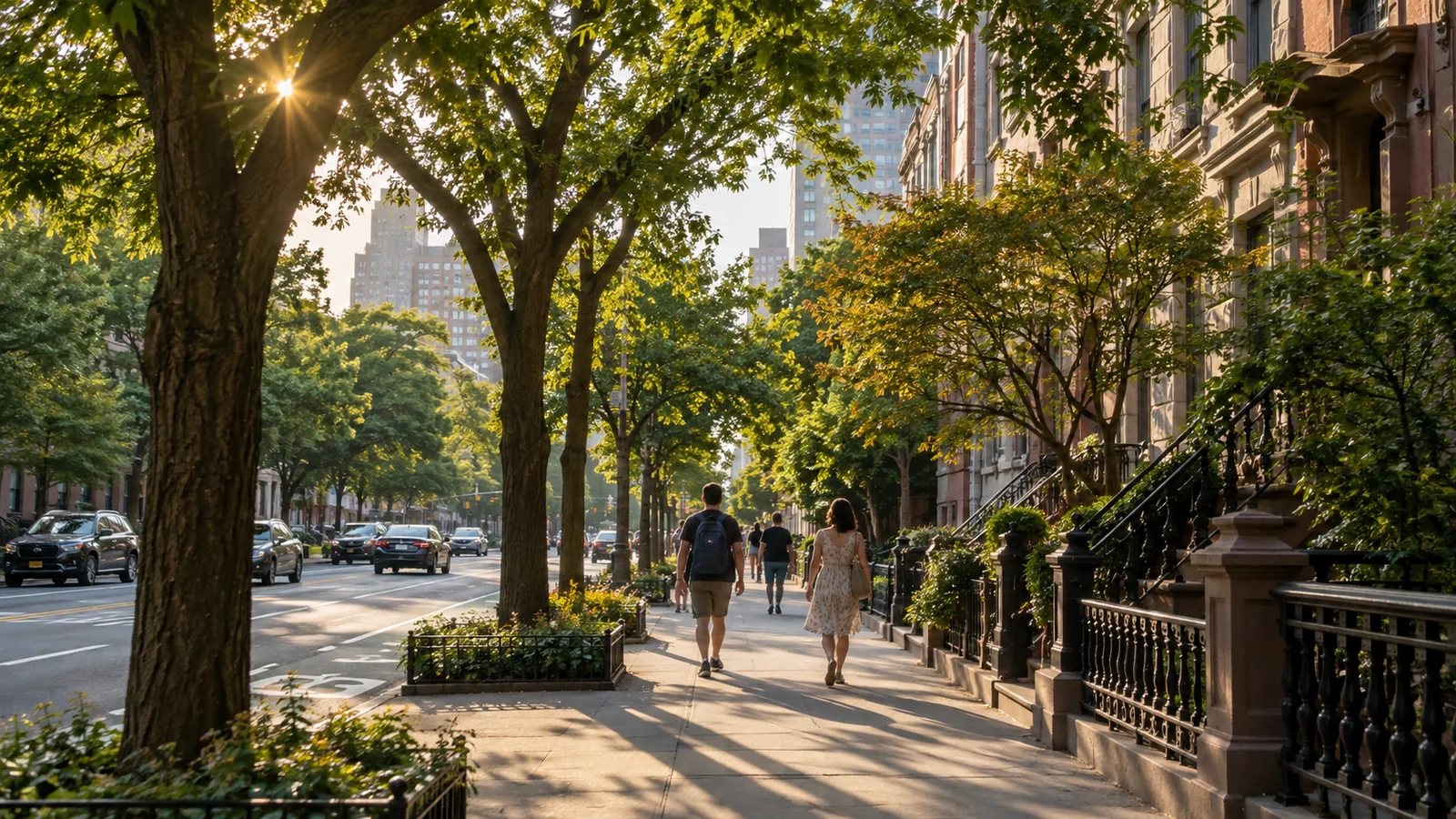
Shade, surfaces and accessible cooling spaces all affect how heat is experienced at street level.
KEY TAKEAWAYS- An air-temperature forecast does not tell the full story of a walk along an exposed road.
- Cooling centers, drinking water and clear public information matter most when people can reach them.
- A citywide forecast describes broad conditions, while a pedestrian experiences shade, reflected heat and wind at a particular location.
- Trees offer shade and other benefits, yet planting them is only the first step.
- A cooling center is useful only if people know it is open, can get to it and feel welcome there.
Heat is local
An air-temperature forecast does not tell the full story of a walk along an exposed road. Sun, wind, pavement and nearby buildings can make conditions feel very different within a few blocks.
Tree canopy provides shade and can cool surrounding air, but trees need space, water and maintenance. Some places may benefit faster from awnings, transit shelters or redesigned public spaces.
Plan for people at risk
Cooling centers, drinking water and clear public information matter most when people can reach them. A strategy should account for residents who work outdoors, have limited mobility or cannot cool their homes adequately.
Cities can use local temperature measurements to target investments, then check whether the changes improve real routes and neighborhoods. Heat adaptation is a public-service task as well as a design task.
Measure where people actually move
A citywide forecast describes broad conditions, while a pedestrian experiences shade, reflected heat and wind at a particular location. A route to a bus stop may be exposed even if a nearby park is cool. Planners can map temperatures alongside the places people wait, walk and work to identify the most useful interventions.
Street measurements should be repeated under comparable conditions. A sensor in direct sun and one in a shaded enclosure may report different things. Community accounts can help identify a dangerous route, but they work best alongside careful measurements and a record of who uses the space at different times of day.
Shade is infrastructure
Trees offer shade and other benefits, yet planting them is only the first step. Roots need room, young trees need water and species choices must fit local conditions. A row of trees that dies after a few seasons will not deliver the promised cooling. Maintenance budgets belong in the original plan, not as an afterthought.
Built shade can complement trees. Covered bus stops, awnings and redesigned plazas may provide immediate protection where a tree cannot grow or will take years to mature. Pavement and building surfaces can also affect heat, though materials should be tested for glare, durability and whether they shift discomfort onto another part of the street.
Cooling must be reachable
A cooling center is useful only if people know it is open, can get to it and feel welcome there. Hours, transport, language access and physical accessibility matter. Residents who work outdoors or cannot leave a job may need water, rest and shade near the worksite rather than a distant building.
Heat risk is shaped by housing too. A person in a poorly insulated home may remain exposed after sunset, when the body would otherwise recover. City strategies therefore connect public space with housing, health services and emergency communication. No single design feature can carry the whole burden.
Check the benefit after construction
A project should be evaluated on the route or neighborhood it intended to improve. Planners can compare conditions before and after, monitor tree survival and ask users whether a space is more comfortable. A reduction in surface temperature may be promising, but people also care about access, safety and the time spent waiting in heat.
Equity is a practical test. If the coolest investments go to already shaded districts, the city may widen an existing gap. Publishing the criteria for choosing sites makes the tradeoffs visible. Good adaptation is an ongoing public service: measure, act, maintain and revise as conditions change.
Maintenance is an equity issue
A shaded street can lose its benefit if trees are not watered, shelters are damaged or a public fountain stops working. Lower-income neighborhoods may have less capacity to fill those gaps privately. A city should budget for maintenance and publish who is responsible for repairs, not just celebrate the number of new installations.
Residents can help identify failures, but reporting systems should be easy to use without a smartphone or a complex form. A plan that reaches only the people who can navigate a digital portal may miss those most exposed. Cooling infrastructure works best when everyday upkeep is as visible a priority as the launch.
Coordinate with the broader city
Street heat is affected by transit, building design, traffic and access to green space. A new bus stop may reduce walking distance but still leave passengers in direct sun. Road resurfacing may be an opportunity to add shade and safer crossings at the same time. Coordinating projects can make each investment more effective.
Cities also need to communicate during extreme heat. Clear opening hours for cooling spaces, current information about water points and messages in the languages residents use can turn a physical resource into a practical option. The goal is not simply a cooler map but fewer people facing long, unavoidable exposure.
The durable measure of success
A heat plan succeeds when people can use ordinary routes with less exposure, especially during the hottest hours. That outcome depends on local design, reliable maintenance and services that remain open when demand rises. It should be assessed with measurements and with the experience of residents who cannot simply avoid the street. Treating cooling as an ongoing public responsibility, rather than a one-time beautification project, keeps attention on those practical results.